Scholarship list
Podcast
Availability date 04/22/2025
Drs. Lederle and Wharton-Beck discuss a class they co-teach that examines how urban transportation infrastructure has historically influenced racial policies, using the Rondo neighborhood as a case study-and explores how things can be done differently today.
Dr. Rita Lederle is an associate professor in the Department of Civil Engineering. She is interested in improving infrastructure through materials, design, and construction and maintenance techniques. Her research focuses on concrete pavements and bridges, with an emphasis on practical, implementable solutions. Prior to joining the faculty of St. Thomas, Dr. Lederle worked as a structural design engineer for both the Minnesota and Wisconsin Departments of Transportation, where she was responsible for the design of new highway bridges and retaining walls, as well as repairs and rehabilitations of existing bridges.
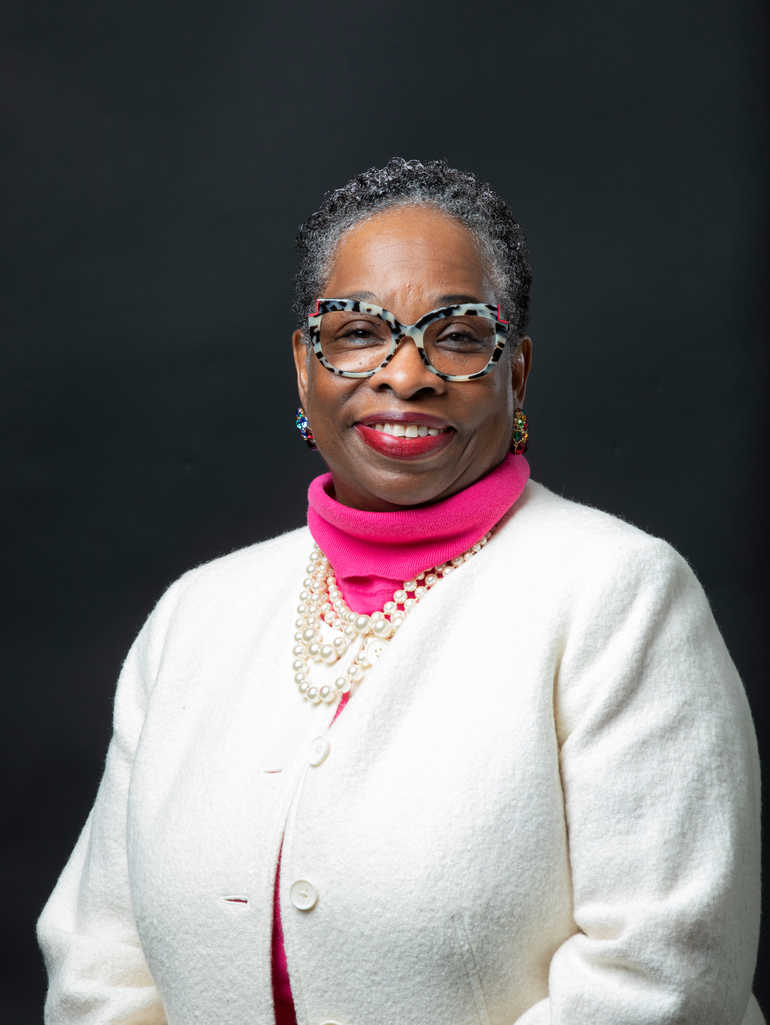
Dr. Aura Wharton Beck is an associate professor in the School of Education. She began her career as a teacher for hearing impaired students in the Chicago Public Schools. Her leadership positions include mentoring and coaching teachers, serving as an adjunct faculty in higher education and as a public school principal. Education Minnesota captured her philosophy of education in a statewide television commercial titled "validatED." Dr. Wharton-Beck earned her EdD degree of the University of St. Thomas College of Education, Leadership and Counseling and in 2018 Aura joined the faculty of the Department of Educational Leadership as an assistant professor.
Podcast
Availability date 03/19/2023
Dr. Aura Wharton-Beck, Assistant Professor in the Department of Educational Leadership, discusses her research about African American professional women ('Government Girls') working for the federal government during World War II. She became interested in this topic as a young girl when she found her mother's yearbook, Whirl-i-gig: A Pictorial Story of Midway Hall for Government Girls 1946 documenting her experience as a Government Girl.
This was the first time she had seen African American women in professional roles as statisticians, loan analysts, and financial computer analysts, opening her eyes to a greater number of opportunities and career options.
Her research included interviews with four Government Girls who were then in their 80's and 90's, outreach to local historical societies, The Schomburg Center for Research in Black Culture, The Moorland-Spingarn Research Center at Howard University, The Mary McLeod Bethune Council House, The National Archives, Library of Congress, and The Minnesota Historical Society.